- Home >
- News >
- > Company News >
- Foyo Ceramic Ball Valves used in S zorb Sulfur Removal system
Foyo Ceramic Ball Valves used in S zorb Sulfur Removal system
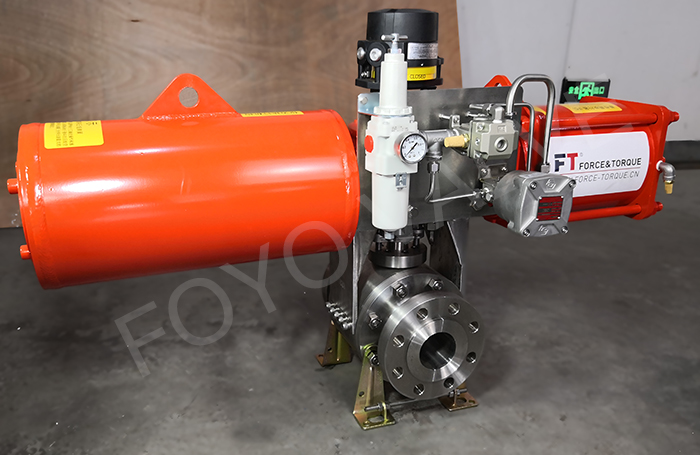
Foyo Ceramic Ball Valves used in S zorb Sulfur Removal system
S Zorb(TM) Sulfur Removal Technology has many advantages, but high temperature and high speed abrasive fluids caused severe problems for the valves, Foyo developed a special ceramic ball valves only for S Zorb equimpents in 2014, and after nearly four years’ service,
the performance of the ceramic ball valves makes the customer satisfied, and in May, 2018, the end user ordered another two sets pneumatic ceramic ball valves for their S Zorb System.
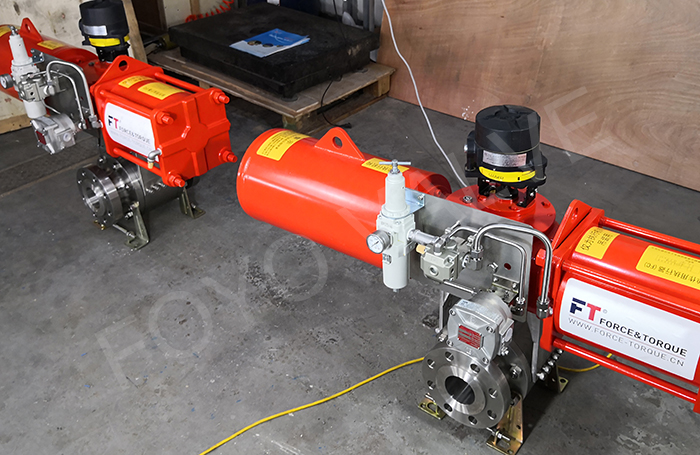
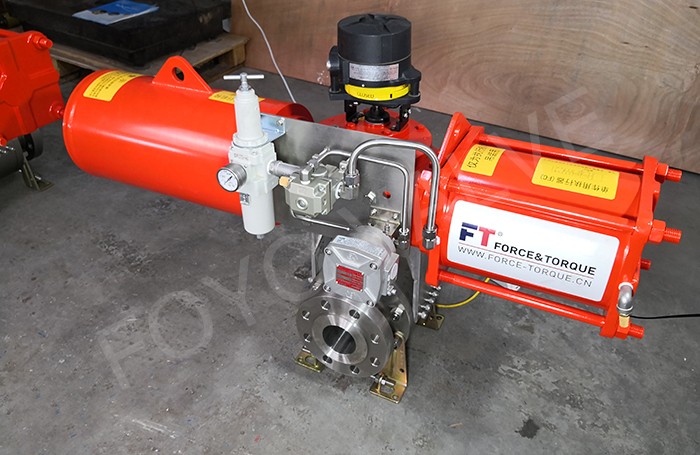
Name: Pneumatic Ceramic Ball Valve
Size: 3”
Pressure Rating: CL600
Flange Ends: ASME B16.5, RF, CL600
Body: SS316
Ball and Seats: Ceramics
Actuator: FT Scotch Yoke Pneumatic Actuator
Solenoid Valve: ASCO WSNF Explosion Proof
Limit Switch: WestLock 2600 Explosion Proof
Filter and Regulator: SMC AW40
Working Conditions:
High temperature and High abrasive
Medium/Service: SORBENT/H2 + Hydrocarbon
Operating Pressure: 2.97Mpa
Operating Temperature: 427℃
Design Pressure: 4.26Mpa
Background:
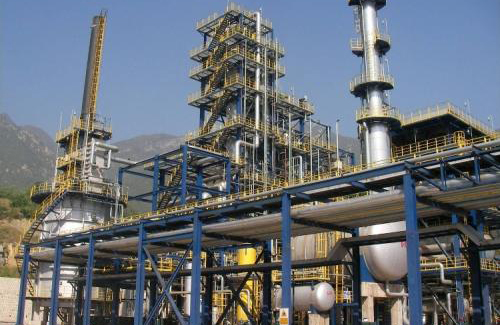
S Zorb(TM) Sulfur Removal Technology is very different from what is commonly known as the Hydrodesulfurization (HDS) Technologies. What distinguishes S Zorb(TM) SRT from the rest of the commercially available gasoline desulfurization technologies (all are the HDS type) is what matters most to all refiners. As the environmental regulations require lower and lower sulfur content in the gasoline products, most HDS users find themselves needing to spend more capital for upgrading the existing HDS units, taking a hit on lost production due to unit down time, and suffering from additional operating cost due to further loss in Octane Number and liquid yield. The need for more high purity hydrogen would strain further the always tight hydrogen supply situation which is common in most refineries. With S ZorbTM SRT, this can be avoided by designing a unit that will meet your ultimate needs while you operate the unit in an optimal mode for your current needs.
The main chemical reactions in the S Zorb SRT Reactor are sulfur adsorption, olefin hydrogenation, and olefin hydro isomerization. Sorbent regeneration and reduction occur in the Regenerator and Reducer.
Compare to other technologies, SZORB SRT has following advantages:
i. Low octane loss
Our proprietary sorbent helps minimize olefin saturation. By using unique catalytic chemistry, the sulfur is adsorbed from the hydrocarbon rather than released by traditional hydrogenolysis. The sorbent also promotes olefin hydro isomerization, which helps counter octane loss that occurs from olefin hydrogenation. In some cases, it can lead to an overall gain in octane.
ii. Very low volume loss
The S ZorbTM SRT process has very low volumetric losses, and does not trade octane gain for volumetric loss.
iii. Sulfur removal to 10 ppm and lower (from >1000 ppm feed sulfur in one step!)
If your goal is to meet a 30 ppm average product sulfur, our technology can help you achieve this. However, the S ZorbTM SRT process can also help you plan for the future, and for most gasoline feeds, our process can achieve product sulfur levels less then 10 ppm.
iv. Low hydrogen consumption
The S ZorbTM SRT technology has lower hydrogen consumption than hydrotreating, which lowers operating costs and makes hydrogen supplies available for other uses.
v. Ability to use low purity hydrogen
High purity hydrogen is not a requirement for the S ZorbTM SRT process, and our process can operate with low hydrogen purities.
vi. Run lengths to match FCC operations
Because the sorbent catalyst is continuously regenerated, the Reactor activity is stable and does not decrease like fixed-bed, hydrotreating processes. The S ZorbTM SRT process is designed to match the run lengths of FCC units.
vii. Does not require fractionation of FCC stream
If you have an existing fractionator for your FCC naphtha, the S ZorbTM SRT process will treat the heavy or light stream. If you do not have a fractionator, the S ZorbTM SRT will treat the entire naphtha stream. If you have an existing fractionator but would like to employ it for some other use, we can design your unit to treat the combined stream.
viii. Low operating costs
After including costs associated with run length, octane loss, volume loss, and general operating parameters, S ZorbTM SRT technology has comparatively low operating costs.
ix. Competitive capital costs